


According to Menocal et al., (2015, P.12), corruption is defined as “the misuse of resources or power for private gain”. Menocal et al., (2015,P.12) define political corruption as the abuse of office by those who make the “rules of the game”, distorting one of Fukuyama’s (2013) pillars of political development, the rule of law. Menocal et al., lists categories of corruption which include bribery, embezzlement, fraud, patronage, clientelism and nepotism. An informative overview of corruption is presented by Transparency international here: https://www.youtube.com/watch?v=hglpdc8vwW0
The two prevalent theoretical approaches oft used to explain corruption are principal-agent (PA) and the collective action (CA). The PA theory is based on two assumptions, according to authors like Ross (1973, cited in Marquette and Peiffer 2015, P.2). Firstly, the principal and the agents have divergent interests. Secondly, there is asymmetrical informational between the principal and the agents, with the latter possessing more information than the former. The principal agent problems arises when the agent pursues their own interest at the expense of the principal. For example, a scenario presented in the Unit’s reading told about an agent who thought that the tax regimes were disproportionately negatively affecting women traders. Having unsuccessfully made a case for a reduced tax burden on the women, the agent proceeded to apply their own “concession” to “right the wrong”. While the concept of tax concessions is admirable, the agent’s solution (followed by the gift giving by the women in appreciation) was corrupt, in a principal-agent way since their boss or “principal” could not monitor their every move and therefore had asymmetrical information. Critics argue that the PA approach fail to explain systemic corruption, in its primary focus on individual motivations. Additionally, some note (eg. Booth and Cammack 2013, cited by DFID 2015, P.16) that the absence of “principled persons” (those principals who would hold agents accountable) renders PA anti-corruption interventions ineffective. As such, the collective action (CA) theory is proposed to address some of these shortcomings of PA.
The CA theory is one which assumes that corruption is systemic and that there is little benefit to be gained from avoiding corruption. DFID (2015, P.16) notes that in CA, the principals are also corrupt and as such prioritise the interest of a particular group over that of the public. Some however, caution that corruption is a subjective thing (Lucy Koehchlin here: https://www.youtube.com/watch?v=295T3fUF1SM) and that it is pervasive rather than existing solely in the developing world. Given this, it begs the question of the “acceptable” level of corruption which can co-exist with development progress (Henley’s 2010 discussion on the role acceptable levels of corruption in some Asian countries, which was vital to development progress, comes to mind).
Marquette and Peiffer (2015, pp.8-9) contend that the issue with PA and CA is that they both classify corruption as a problem, rather than appreciating the functions it performs (invariably, political mobilization and redistribution in developing countries who lack the fiscal space for such and the provision of goods and services which the state fails to provide). I have a difficult time accepting Marquette and Peiffer’s unorthodox recommendation but I believe that it can be taken a step further. Rather than just understanding and appreciating the functions performed by corruption, why not use it as an instrument through which information is gathered on deep-rooted issues in the society? That information can then be translated to specific problems/issues to be mitigated, particularly where it negatively impacts development agendas. After-all, corruption can be said to cause a leakage of development, distorting expected benefits and shortchanging those most in need.
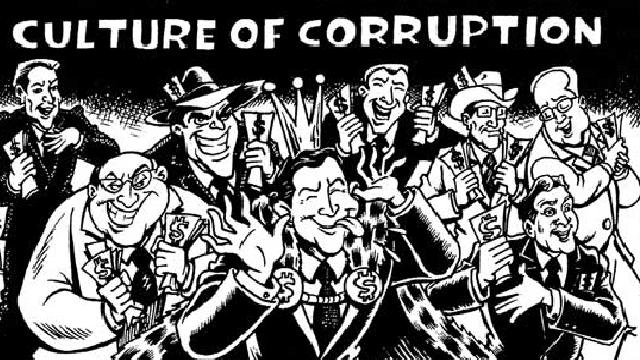
Consider the contemporary example of Spain’s “Gürtel case” (Edwards, 2019) which saw the trial of businessman Francisco Correa whose corrupt behaviour thrived in an environment of corrupt high-ranking officials. The case revealed that authority figures conspired to sabotage the objectivity and efficiency of public procurement processes, inter alia, saddling the country with bad investments and allowing for the reallocation of public funds to inefficient operations. In the aftermath of the ensuing trial, Spain saw effects which included: public protest against corruption amidst an economic crisis; people’s confidence in political processes waned and they became suspicious of political actions; Catalan made a case to be annexed from Spain in a bid to run its own affairs. One can say that the average Spaniard seemed to be negatively affected by corruption but where do you go from there? In designing anti-corruption interventions, understanding the systemic issues, such as the incentives for public servants to increase their income via corruption, may just allow a better understanding of factors which provided fertile grounds for corruption; increasing the possibility of effective interventions.
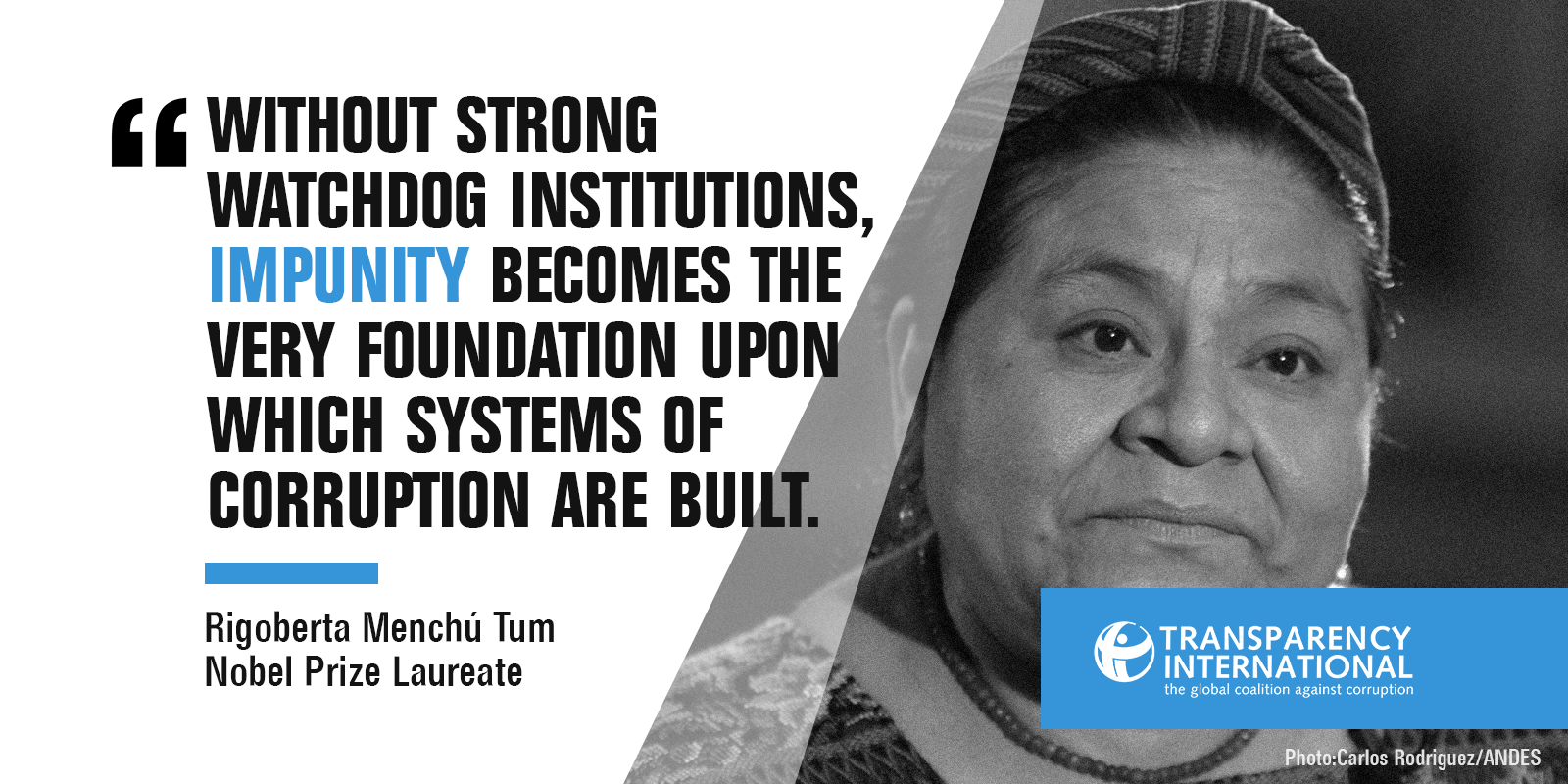
One can say that Corruption cultivates inequality, inefficiency and ineffectiveness, because it leverages favour from those with the highest purchasing power. Who would suffer in such an equation? The poor – those with a low purchasing power, influence or “monied” backing. In reference to Fukuyama’s definition of political development, corruption erodes all of the required pillars, negatively impacting development in all of its definitions.

References
DFID, 2015. Why corruption matters: understanding causes, effects and how to address them, evidence paper on corruption , London : DFID.
Edwards, S., 2019. Spains water: Inside the corruption
scandal that changed a nation. [Online]
Available at: https://www.theguardian.com/news/2019/mar/01/spain-watergate-corruption-scandal-politics-gurtel-case
[Accessed 3 March 2019].
Fukuyama, F., 2013. What is political development AND The dimensions of development . In: Political order and political delay From the industrial revolution to the globalisation of democracy . London: Profile Books Ltd, pp. 23-51.
Henley, D., 2010. Three principles of sucessful development strategy. [Online] Available at:http://www.institutionsafrica.org/trackingdevelopment_archived/resources/docs/Henley-three-principles.pdf [Accessed 12 February 2019].
Lucy Koechlin, T. T., 2016. Power of corruption. [Online] Available at: https://www.youtube.com/watch?v=295T3fUF1SM) [Accessed 2019 March 2019].
Marquette, H. & Peiffer, C., 2015. Corruption and Collective Action. [Online]
Available at: http://www.dlprog.org/publications/corruption-and-collective-action.php [Accessed 25 February 2019].
Menocal, A. R. et al., 2015. Why corruption matters: understanding causes, effects and how to address them. Evidence paper, London: DFID.
Transparency International , 2018. What is corruption?. [Online]
Available at: https://www.youtube.com/watch?v=hglpdc8vwW0 [Accessed 5 March 2019].
 Musings on Politics and Its inner Workings