

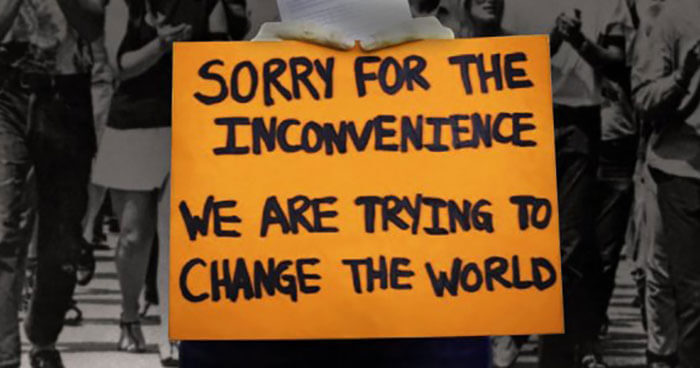
Social movements are large and invariably informal groups, according to Menocal (2016, p.1), which unite against authority and power, in response to perceived wrongs or injustice (think the black lives matter movement in the US or the Tunisian man Mohamed Bouazizi who committed suicide by fire in protest). Tarrow (1994, p.6) equivalently notes that social movements are linked to contentious politics where ordinary citizens participate in collective action against elites, authorities and opponents. Some of the reasons for growth in social movements (Menocal 2016, pp.1-2) are disillusionment with inadequate representation by formal mechanism and institutions; improvement and growth in technology which facilitates sharing of information and various forms of collective actions.
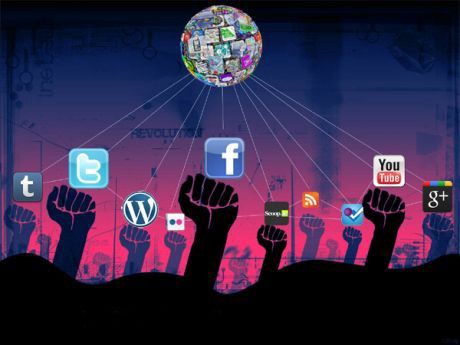
As noted by Brecher, Costello and Smith (2009), social networking has existed for ages (with origins in the works of Marx and Engels according to Tarrow 1994, p.17), and specifically in the context of politics, it is about “finding and building communities of interest, linking common struggles and acting collectively”. Social media (that technological platform which enables social networking) has created multiple opportunities for social movement because of factors such as:
- Enabling the rapid dissemination of information
- Creating platform which allows marginalised groups to share their opinions and concerns.
In reference to personal experience I would add that it allows easy and cost effective connections to networks like as family, friends or other people with shared interests. The significance of this is that it allows cultures and practices to transcend geographical barriers, to both positive and negative impacts.
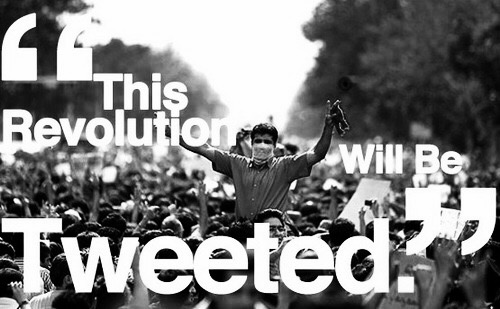
Social media will have positive and negative impacts. For example, the ease with which hate speech is shared online has played some part in influencing people in diverse parts of the world to undertake vile acts such as killing of innocent people (we only need to consult the last year and all its mass killings for reference) or magnifying anti-immigrant sentiments. On the other hand, social media was successfully used to assist Syrian asylum seeker Hassan Al Kontar who found himself in limbo after fleeing his war-torn homeland. The political activists would therefore do well to be mindful of the opportunities to be leveraged from such platforms.
Social movements are one tool in the political activists’ arsenal which can add impetus to objectives of bridging the gap between situational awareness and practical actions by relevant stakeholders. That is, social movements can engender changes via advocacy, campaigning and lobbying which are aimed at influencing the attitudes, policies and practices of policy makers (Green 2016, p.214). These avenues can vary from public “showdowns” to closed door negotiations. For example, a local group was protesting the privatisation of beaches near hotel properties, by protesting on the site (in the Grenadine island of Canouan) while others called for a deeper and more methodological scrutiny of the legal setup of the arrangement and its impact for the country. What are some of the factors which could influence the impacts of social movements?
The context within which Social movements operate will impact the degree to which they engender change. As Rex Bloomstein in his podcast “dying for a song” shows, contexts of authoritarian regimes, gender inequality and civil unrest have had dire consequences for social movements in the music industry; musicians perceived to be a threat to political parties, religious groups or others with perceived slights) are threatened, killed or exiled. I am intrigued that innocuous mediums such as music can form the basis of a social movement, although on second thoughts I am recollecting stories of how slaves’ spirituals songs built camaraderie and revolutionary spirit. The nature of the leader in social movements is another important influencer, be they transactional or transformational as discussed by Green (2016, pp.196-211). Transactional leaders would leverage resources and relationships (eg. Donald Trump in his attempt to leverage a border wall for federal government funding) to get results while the transformational leader appeals to core belief systems to engender a sense of ownership over actions (eg. Nelson Mandela).
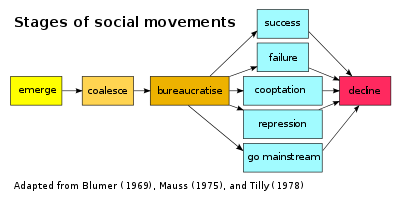
While social movements can facilitate political change, there are several factors which make it difficult for funding agencies to work through them. According to Menocal (2016, p.3) these include their explicitly political and informal nature. These two traits are at odds with funding agents’ reluctance to get involved in politics beyond a surface level, for a myriad of reasons, (Carothers and de Grammont 2013, pp.3-5) or their formal/bureaucratic setup which cannot accommodate informal/ad hoc arrangements. As such, social movements often remain out of reach for officially sanctioned actions, although they do sometimes form the basis of political parties and become part of the official political mechanism.
All in all, social movements present an avenue for demanding changes by rallying public support against perceived wrongs.

References
Barron, L., 2018. Syrian man marooned for months in a Malaysian airport has been granted asylum in Canada. [Online] Available at: http://time.com/5464219/hassan-al-kontar-syria-asylum-canada/ [Accessed 16 March 2019].
Brecher, J., Costello, T. & Smith,
B., 2009. Social Movements 2.0. [Online]
Available at: https://www.thenation.com/article/social-movements-20/
[Accessed 16 March 2019].
Carothers, T. & Grammont, D. d., 2013. The new politics agenda. In: Development aid confronts politics: the almost revolution. Washington D.C: Carnegie Endowment for International Peace, pp. 3-17.
Green, D., 2016. How change happens. Oxford: Oxford University Press.
King, B. & Bloomstein, R., n.d. Dying for a song. [Podcast Recording] (BBC).
Menocal, A. R., 2016. Social Movements. GSDRC Professional Development Reading Pack no. 50, University of Birmingham.
Tarrow, S., 1994. Power in movement, social movements and contentious politics. 3rd ed. New York: Cambridge University Press.
The Vincentian, 2017. Terry
Bynoe released. [Online]
Available at: http://thevincentian.com/clients/thevincentian/Vincentian-PDF-06-01-17.pdf [Accessed 16 March 2019].
Thomas, J., 2017. Canouan: A
battle worth fighting. [Online]
Available at: http://thevincentian.com/canouan-a-battle-worth-fighting-p13144-110.htm
[Accessed 16 March 2019].

